Why Aluminium Profile Systems Have Replaced Steel Welding in Modern Factory Builds

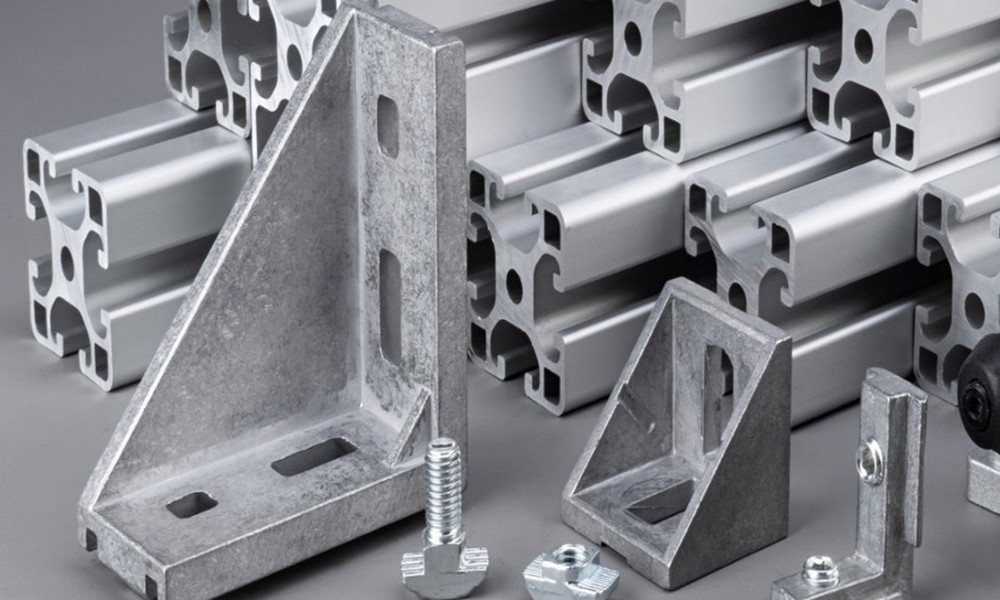
Walk through any modern UK manufacturing facility and the chances are the workstations, machine guards, conveyor frames, and equipment enclosures are built from aluminium profile rather than fabricated steel. This shift has been one of the most significant changes in industrial construction over the past thirty years, driven not by fashion but by clear practical advantages that accumulate across every stage of a build from design to installation to long term maintenance.
This article examines why aluminium profile systems have become the default choice for modular industrial construction and what makes them superior to traditional welded steel fabrication for the vast majority of applications.
Speed and Simplicity of Construction
Welded steel fabrication requires specialist skills, welding equipment, surface treatment after fabrication, and significant lead time from design to finished component. Aluminium profile systems require none of these. Profiles are cut to length with a standard saw, assembled using mechanical connectors and fittings, and can be modified or extended by any competent fitter with standard hand tools. A workstation or machine guard that would take days to fabricate in steel can be assembled from aluminium profile in hours, without specialist equipment or a fabrication shop.
This speed advantage is particularly significant in environments where production schedules change, cell layouts are reconfigured, or new equipment requires guarding or support structures at short notice. The modular nature of aluminium profile means structures can be adapted or completely reconfigured without scrapping the original components. A comprehensive range of aluminium profile systems and components covering profiles, connectors, panels, feet, and accessories is available from specialist UK suppliers for both standard and custom industrial builds.
Weight Advantage
Aluminium is approximately one third of the density of steel at comparable structural section sizes. In a factory context this matters for several reasons. Lighter structures are easier to handle during installation, reducing manual handling risk and the need for lifting equipment. Lighter guards and enclosures put less load on machine frames and floor mountings and where structures need to be moved or repositioned as part of regular production changes, the weight reduction makes this a realistic proposition without a crane or forklift.
Corrosion Resistance
Untreated steel corrodes, and managing corrosion in a production environment adds ongoing cost through painting, inspection, and eventual replacement of degraded components. Aluminium naturally forms a protective oxide layer that prevents further corrosion without any applied coating. Anodised aluminium profiles extend this protection further, providing a hard, attractive surface that is resistant to chemical exposure, cleaning agents, and the general humidity of an industrial environment. In food production, pharmaceutical, and clean room environments where hygiene and resistance to cleaning chemicals are mandatory requirements, aluminium profile is the only practical choice for modular framing.
Precision and Repeatability
Extruded aluminium profiles are manufactured to tight dimensional tolerances, meaning every profile of a given section is functionally identical. This precision is difficult to achieve consistently in fabricated steel construction, where welding distortion, grinding tolerances, and human variation introduce dimensional inconsistency between nominally identical components. For modular systems where components from one assembly need to be interchangeable with those from another, or where new sections must extend existing structures in perfect alignment, the dimensional consistency of extruded profile is a significant practical advantage.
Sustainability and Recyclability
Aluminium is one of the most recyclable materials in industrial use. Aluminium profile components at end of life retain their material value and are readily recyclable without degradation of the alloy properties. For businesses with sustainability targets or working towards ISO 14001 environmental management certification, the recyclability of aluminium framing systems is a meaningful factor in lifecycle assessment compared to surface-treated steel fabrications.
Frequently Asked Questions
Is aluminium profile strong enough for heavy industrial applications?
Yes; structural aluminium profiles in 45mm, 60mm, and 90mm series handle the loads required for most industrial workstations, conveyor frames, and machine guarding, and larger heavy-duty profile sections are available for demanding structural applications.
Can aluminium profile systems be modified after installation?
Yes, and this is one of their primary practical advantages; profiles can be extended, shortened, repositioned, and new components added using the same mechanical connector system without specialist tools or skills.
How does the cost of aluminium profile compare to welded steel?
Material costs are typically higher for aluminium profile than basic steel section, but total project cost including design time, fabrication, surface treatment, installation, and future modification is frequently lower when the full lifecycle is considered.
Are aluminium profile systems compatible between different manufacturers?
Profile systems that share a common slot width and pitch, such as systems compatible with the Bosch Rexroth standard, are broadly interchangeable at the component level; always confirm dimensional compatibility before mixing components from different manufacturers in the same assembly.
Final Thoughts
Aluminium profile framing has displaced welded steel construction across the majority of modular industrial building applications because it genuinely delivers better outcomes across speed, flexibility, weight, corrosion resistance, and long term adaptability.
For factories, production facilities, and engineering teams planning workstations, guarding, enclosures, or support structures, sourcing from a specialist in extruded aluminium profile systems and accessories provides access to the full range of profiles, connectors, and components needed to build and adapt industrial structures efficiently.