

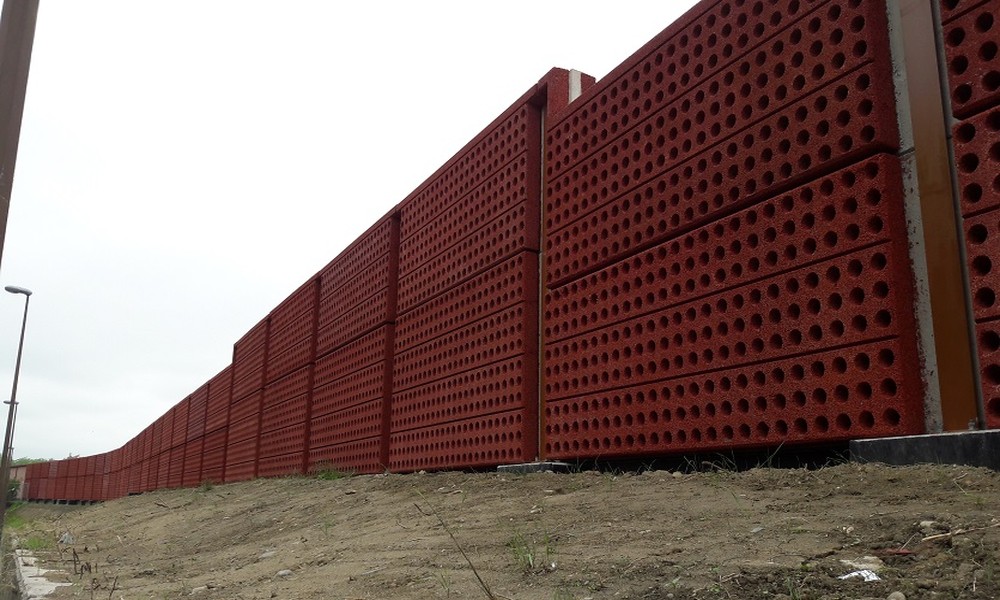
On most construction sites, the first thing people reach for when managing noise is barrier sheets.
And honestly, it makes sense. They’re visible, practical, and relatively easy to install. You line them along the perimeter and secure them properly, and it immediately feels like the site is “under control.”
But once work actually starts, things get more complicated.
Noise doesn’t behave in a simple, predictable way, especially on active sites where everything is constantly moving. That’s usually when teams realise something important: sound barrier sheets alone aren’t enough.
So contractors start layering in other temporary methods to keep noise under control in a more realistic, flexible way.
Barrier sheets are just the starting point.
A sound barrier sheet is often treated as the baseline layer of noise control.
It helps reduce general sound escaping from the site, especially along boundaries. That alone is useful, but it only addresses part of the problem.
On a real site, noise doesn’t come from one direction or one source. It comes from:
- Multiple machines running at once
- Different teams working in separate zones
- Activities that change throughout the day
So while sheets help reduce overall exposure, they don’t fully control how noise behaves inside the site itself.
That’s where additional methods come in.
Moving noise control closer to the source.
One of the biggest improvements contractors make is shifting from “edge control” to “source control.”
Instead of only focusing on the perimeter, they start placing smaller barriers closer to where the noise actually comes from.
For example:
- Around generators
- Near compressors
- Beside cutting or drilling stations
This simple change makes a big difference.
Because instead of waiting for sound to spread across the site and then blocking it, you’re reducing it at the point where it starts.
A construction sound barrier sheet setup at the perimeter is still useful, but when combined with localised control, performance improves significantly.
Temporary enclosures for the really loud work.
Some activities are just naturally louder than others.
Think about:
- Piling works
- Demolition
- Heavy drilling or cutting through concrete
In these situations, perimeter control alone isn’t enough.
That’s when contractors often build temporary enclosures around the activity itself.
These are more contained setups that:
- Surround the noise source more directly
- Reduce how far sound can travel before it spreads
- Help manage peak noise levels during intense phases
It’s a more “focused” way of controlling sound compared to just lining the edges of the site.
And in practice, it often works much better during high-impact stages of construction.
Using the site itself as part of the solution.
Something that experienced site teams often do is use whatever is already available on-site as part of noise control.
It’s not always about adding new materials—it’s about smart placement.
For example:
- Stacked materials acting as sound blocks
- Storage containers shielding sensitive areas
- Equipment positioned to naturally block noise paths
These may not be designed as acoustic barriers, but they still help reduce how sound travels across the site.
In many cases, this kind of “natural buffering” works alongside installed barriers to improve overall performance.
Adjusting how work is scheduled.
Not all noise control is physical.
A big part of managing sound is actually timing.
On well-managed sites, contractors often:
- Avoid running multiple high-noise activities at the same time
- Separate loud tasks into different phases of the day
- Schedule quieter work during sensitive periods
This helps prevent sudden spikes in overall noise levels.
Even if barriers are in place, overlapping noisy activities can overwhelm the system. So sequencing becomes just as important as physical control.
Moving equipment to smarter positions.
Another simple but effective method is repositioning machinery.
Instead of placing equipment wherever it fits, teams start thinking about:
- Distance from residential areas
- Direction of sound travel
- Whether barriers can block or reduce the noise path
Sometimes, just shifting a machine a few meters inward or behind a barrier changes how much noise reaches outside the site.
It’s not complicated, but it requires awareness of how sound behaves in real environments.
Reinforcing barrier sheets when needed.
In some cases, the existing sound barrier system is still useful, but it needs strengthening.
That might involve:
- Adding extra layers in high-noise zones
- Extending coverage during peak construction phases
- Combining sheets with more solid barrier sections
Instead of replacing the system entirely, contractors just enhance it where necessary.
This kind of flexibility is important because noise levels aren’t constant—they change throughout the project.
The key idea: noise control is layered, not single-layered.
If there’s one thing that stands out in real construction work, it’s this:
No single method is enough on its own.
Barrier sheets help. But they’re just one layer.
Effective noise control usually comes from combining:
- Perimeter barrier sheets
- Localised equipment barriers
- Temporary enclosures
- Smart scheduling
- Strategic equipment placement
Each layer handles a different part of the noise problem.
And when they work together, the overall system becomes much more stable and effective.
Final Thoughts
In theory, it might seem like installing a sound barrier sheet system should solve most noise issues.
But in real construction environments, things are more dynamic. Noise shifts, spreads, reflects, and changes depending on what’s happening on site.
That’s why contractors rely on more than just one solution.
They build a layered approach—mixing physical barriers, temporary setups, and operational planning to keep noise under control in a way that actually works day to day.
Because at the end of the time, effective noise control isn’t about one perfect solution. It’s about combining practical methods that adapt as the site evolves.